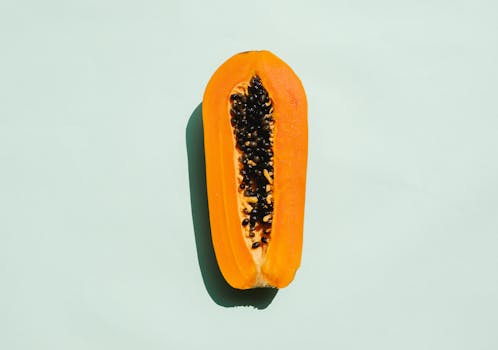
Unlocking the Papaya's Potential: A Zero-Waste Approach
Forget clumsy chopping! The way you treat a papaya profoundly impacts its flavor profile, its very essence. Imagine its enzymes as tiny flavor-releasing sprites – rough treatment crushes their delicate wings, resulting in a lackluster culinary experience. Precision, my friends, is paramount.
Ripeness: The Culinary Compass: Your cutting technique should adapt to the papaya's maturity.
Perfectly Ripe: A ripe papaya yields gently; its skin whispers hints of sunshine yellow or vibrant orange. Here, a lengthwise incision, running from crown to base, is your best friend. This prevents bruising, allowing effortless seed removal. Subsequently, I recommend crafting half-moon segments, or dainty cubes – each piece a testament to your gentle touch. Handle this treasure with the care you'd lavish upon a priceless heirloom jewel.
Semi-ripe Delights: The flesh, while firm, offers subtle give under pressure; the skin showcases a predominantly verdant hue, punctuated by emerging yellow. This stage shines in savory dishes. Employ the same elegant lengthwise slice; then, dice into perfect cubes for salads or zesty salsas. Consider its sturdy texture a blank canvas, perfectly suited to hold diverse flavor profiles without disintegrating.
Underripe Treasures: Never toss an underripe papaya! Although less saccharine, it boasts a higher concentration of beneficial enzymes. A razor-sharp blade and meticulous cuts are key here – dice it finely for smoothies or curries. Its robust structure ensures it holds its form during cooking, adding a unique textural counterpoint. Embrace its resilient nature; its tenacity delivers unexpected culinary benefits when skillfully paired.
Waste Not, Want Not: Zero-waste cooking begins with appreciating the whole fruit. Don't dismiss those seeds! These culinary gems are incredibly versatile. Rinse, dry, and lightly toast them for a nutty snack, or grind them into a unique spice blend for exotic curries. Even the skin, after a thorough scrubbing, adds subtle intrigue and a nutritional boost to stocks or smoothies. Every part of this fruit deserves respect – it's a culinary embodiment of resourcefulness and environmental consciousness.
Beyond the Basics: Master the fundamental lengthwise cut, then unleash your creativity! Fashion decorative shapes for salads or elegant slices for exquisite desserts. The guiding principle remains precision – maintaining the fruit's integrity to maximize its flavor symphony. View your papaya as a culinary sculpture, where each cut enhances both taste and visual appeal.
A Symphony of Enzymes: Honoring the Papaya's Vital Force
Imagine, if you will, the vibrant heart of a papaya—its unparalleled taste isn't solely a matter of sugary sweetness. No, the true magic resides in the bustling activity of its innate enzymes, tiny molecular artisans orchestrating a flavor explosion. These minuscule chefs, so to speak, meticulously craft that unique blend of sweetness, tartness, and subtle nuances we adore. Sadly, this delicate equilibrium starts unraveling the moment the fruit leaves the tree; careless handling hastens its demise, resulting in a culinary tragedy.
From Harvest to Harmony (or Discord): The enzymes within our sun-kissed papaya are veritable alchemists. They meticulously break down proteins and starches, subtly shaping the fruit's taste, texture, and overall mouthfeel. A papaya handled with reverence retains its lively freshness, a testament to nature's artistry. Conversely, mishandling leads to a disheartening decline: a flavorless, mealy pulp. Think of it as a finely tuned orchestra—each enzyme plays its vital part. Disrupt their delicate dance, and the harmonious melody turns discordant.
Zero Waste: An Act of Culinary Respect: The connection between minimal waste and vibrant enzyme activity is undeniably profound. When we meticulously slice the papaya, minimizing cellular damage, we preserve the fruit's enzymatic integrity. This extends its shelf life dramatically, reducing food waste. Every rescued scrap, every cleverly repurposed seed is a victory for environmentally sound practices and a celebration of mindful resource management. It's a testament to our culinary ethics, a commitment to sustainable and ethically sourced food. We're not just preparing food; we're engaging in a form of environmental stewardship, maximizing the nutritional and flavorful bounty of our produce.
Expanding the Circle of Respect: This mindful approach—a gentle dance with the papaya—is far more than a single technique. It represents a broader philosophy of culinary reverence, an understanding of food's lifecycle, a deep appreciation for the resources that grace our kitchens. It's an invitation to expand your culinary horizons! As you master the art of enzyme preservation in the papaya, your skills will blossom, extending to other fruits and vegetables. [You'll refine your knife work](https://www.youtube.com/results?search_query=how+to+cut+a+papaya) (example YouTube tutorial, adapt as needed), maximizing flavor and minimizing waste throughout your entire culinary repertoire. It's about cultivating a mindful connection with your food, a foundation for joyful, sustainable cooking. For more tips on reducing food waste, check out our guide on [how to cook baked potatoes](https://www.bbcgoodfood.com/recipes/baked-potatoes) and minimizing waste in the process. Learning [how to cook lobster](https://www.allrecipes.com/recipe/213711/classic-new-england-lobster-roll/) responsibly is another great step. If you're interested in expanding your culinary skills beyond fruits, you might enjoy our article on [how to make beef stew](https://www.simplyrecipes.com/recipes/beef_stew/) . And for dessert, learn [how to make brown sugar](https://www.kingarthurbaking.com/recipes/how-to-make-brown-sugar-recipe) from scratch!